Please, turn your screen to portrait mode
1949
The idea of engaging Alliance Parliamentarians in collective deliberations on the problems confronting the transatlantic partnership first emerged in the early 1950s. The creation of the Assembly reflected a desire on the part of legislators to give substance to the premise of the Washington Treaty – NATO's founding document, particularly Article 2 – that NATO is an alliance of democracies.
1951
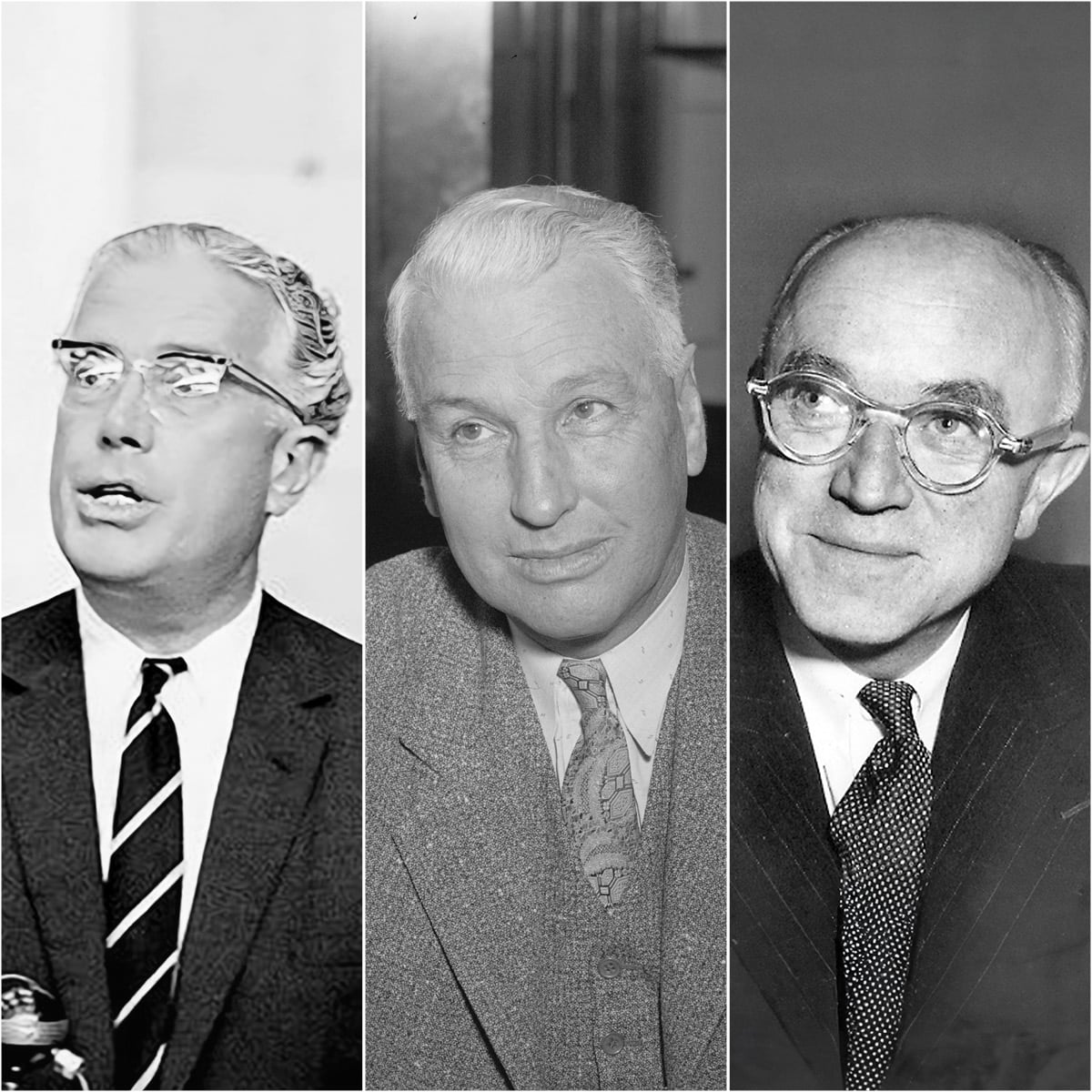
The Founding Fathers are:
Sir Geoffrey de Freitas (United Kingdom)
Mr Finn Moe (Norway)
Senator Guy Gillette (United States)
1955
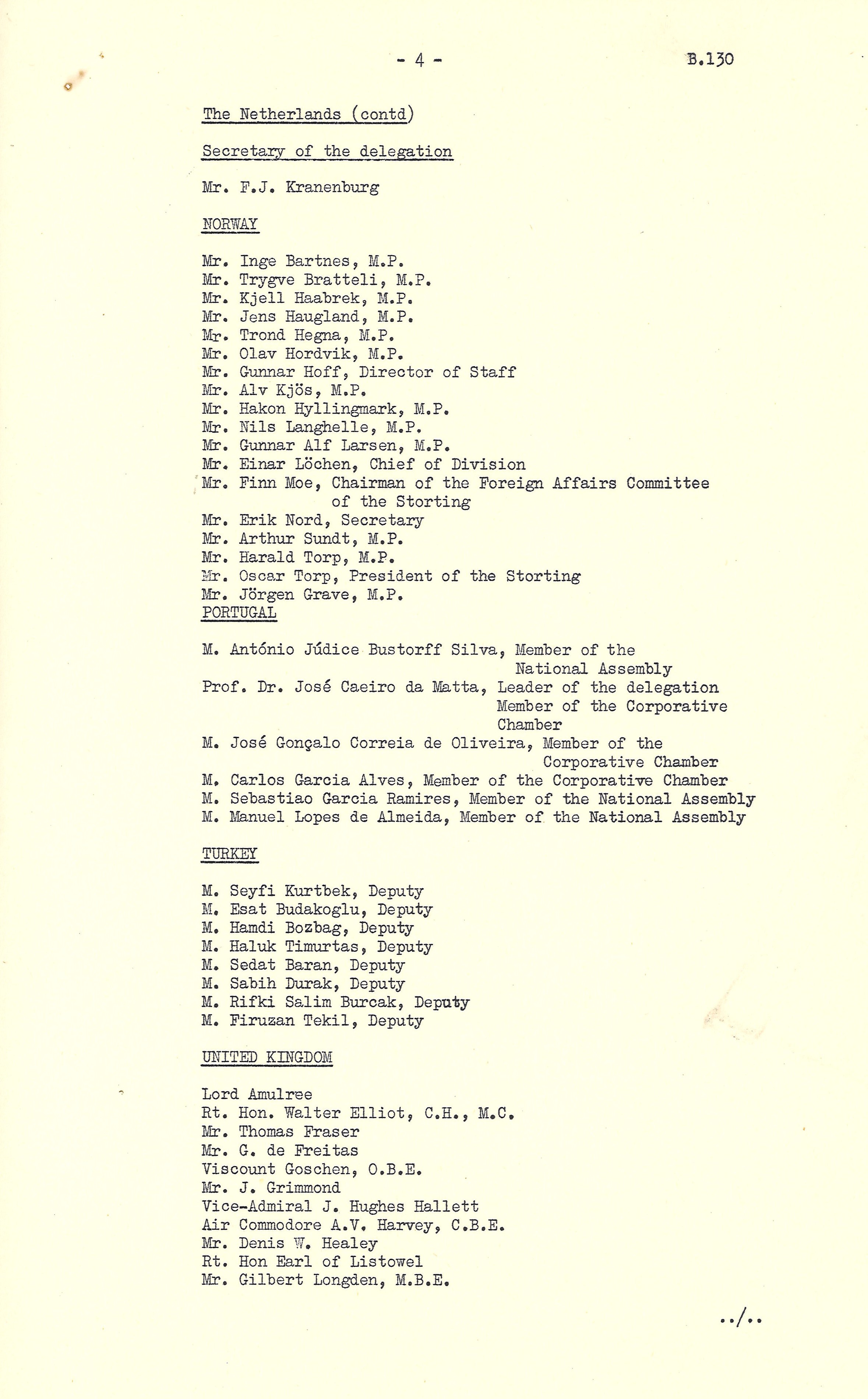
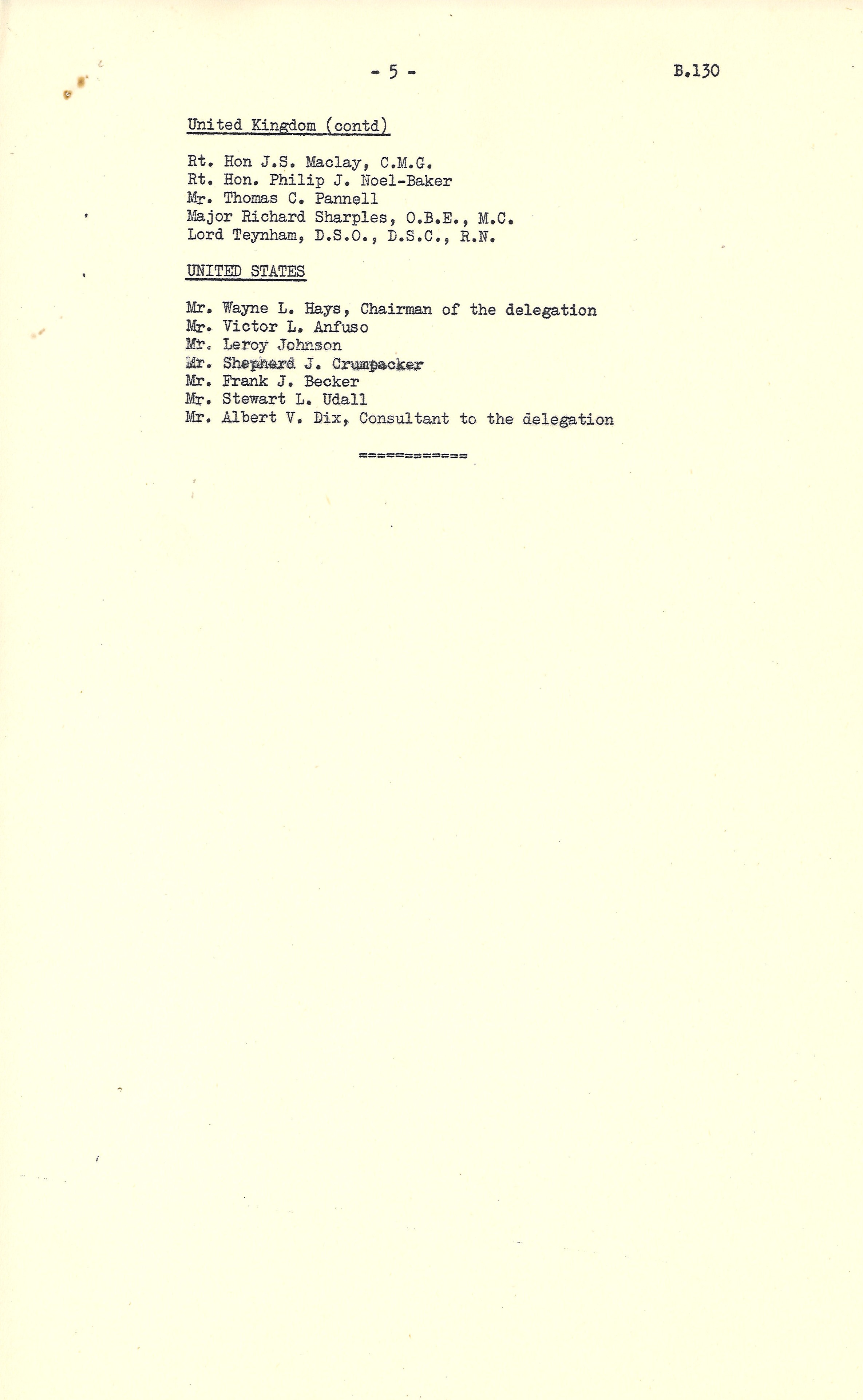
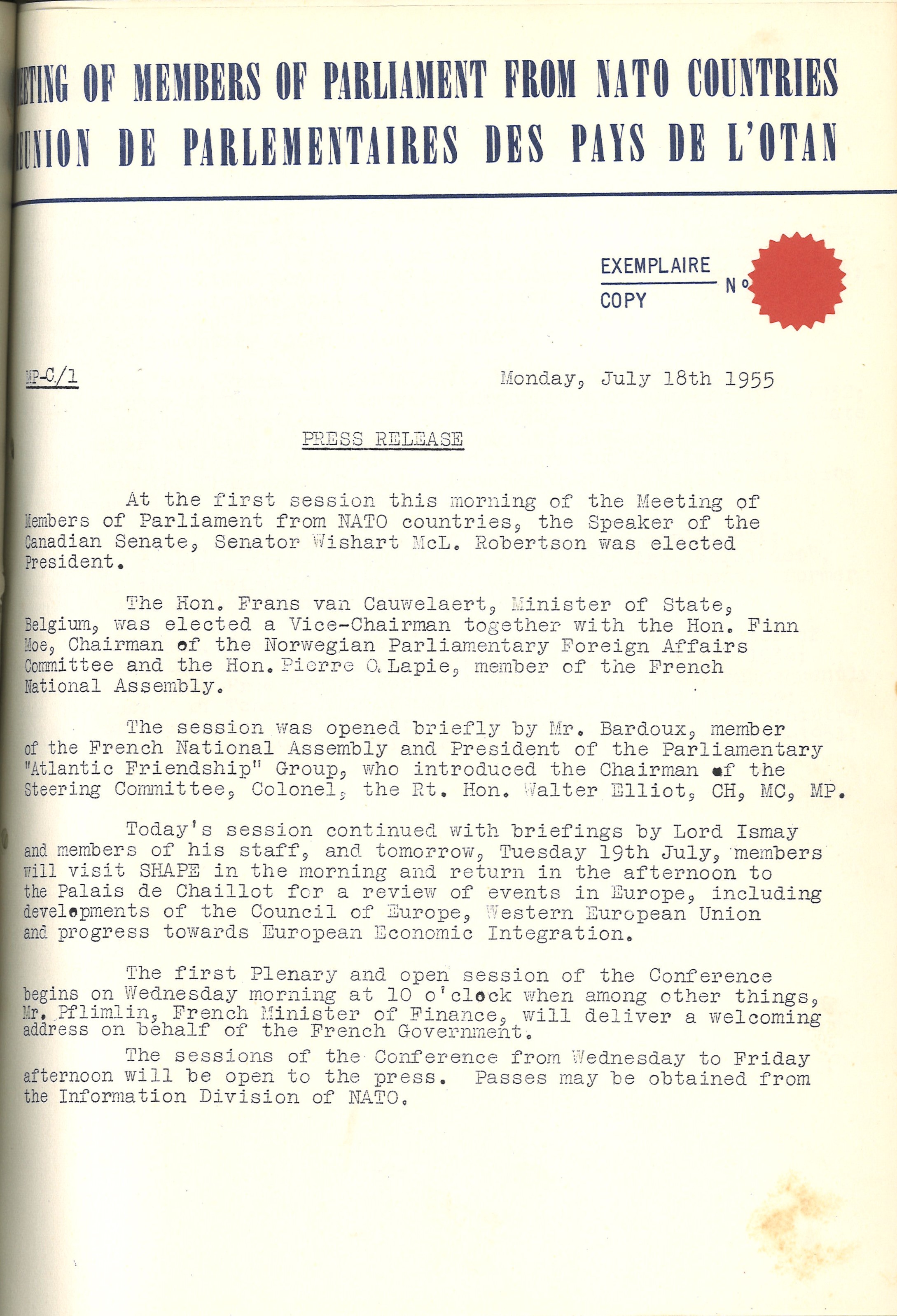
The first “Conference of Members of Parliament from the NATO Countries” was held at NATO Headquarters in the Palais de Chaillot in Paris on 18-21 July 1955, bringing together 158 parliamentarians from 15 NATO nations.
1956
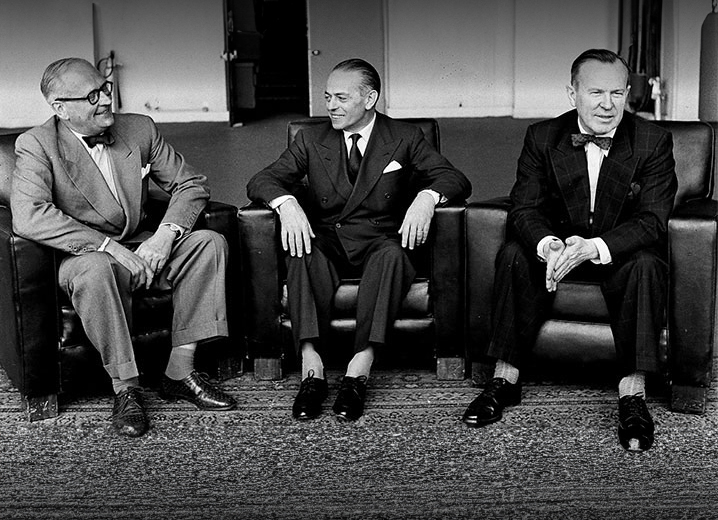
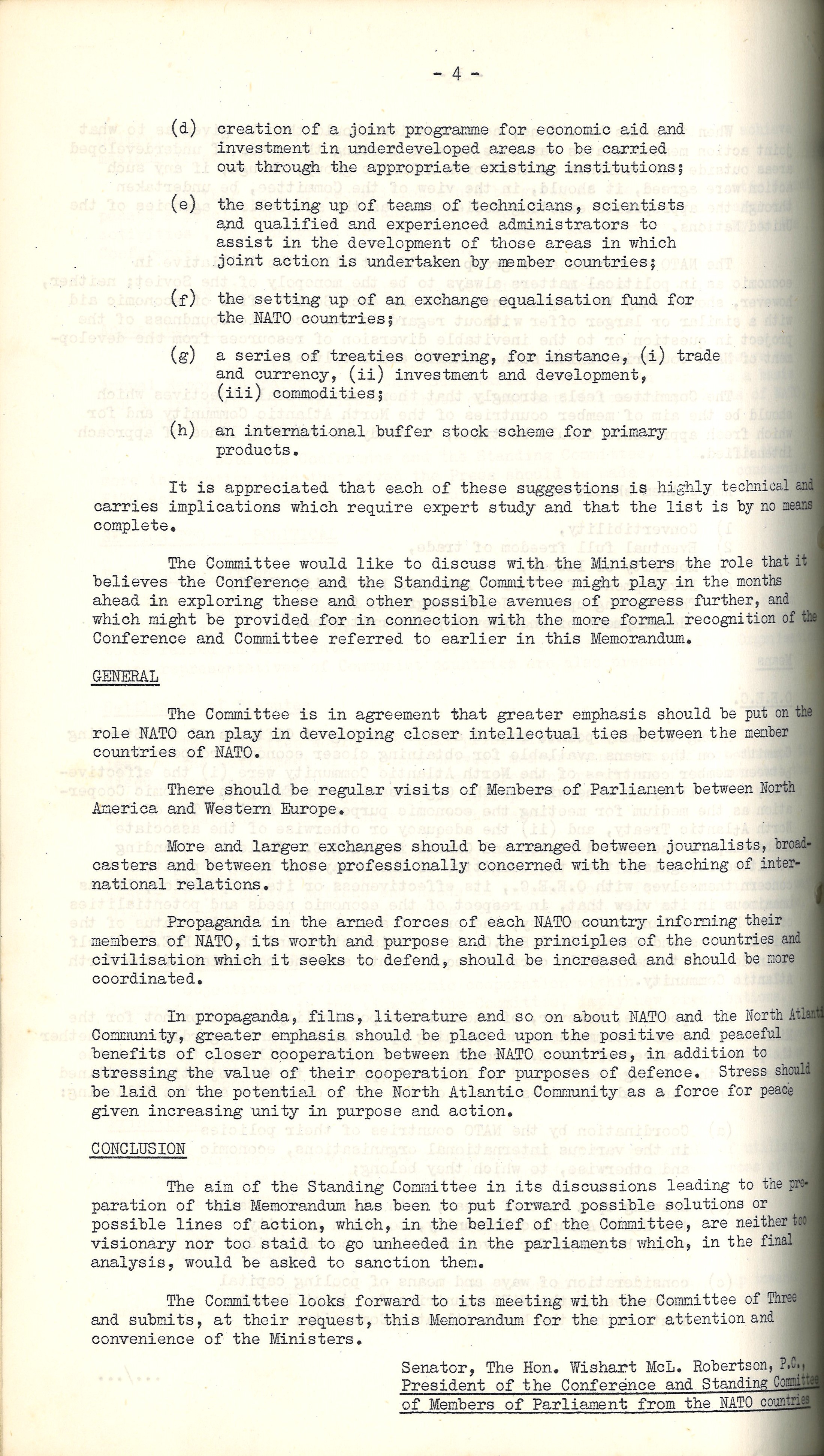
In 1956, the NATO Committee of Three’s Report on Non-Military Cooperation in NATO recommended closer relations between NATO and the parliamentary conference.
1957-1958
Committees were established during the second conference in 1956. In 1958, the number of Committees was set to five – Economic, Cultural Affairs and Information, Military, Political, and Scientific and Technical. Although committee titles and terms of reference have evolved over the years, this basic structure remains today.
1959
Leaders of some NATO countries sent messages of welcome to the NATO Parliamentarians Conference Standing Committee on the occasion of the 5th conference; the first to take place in North America.
1966
The 12th Conference unanimously agreed to rename the organisation as the North Atlantic Assembly.
1967
In December 1967, the North Atlantic Council (NAC) authorised the NATO Secretary General to strengthen cooperation with the Assembly. Since then, the NATO Secretary General has addressed Assembly sessions and responds in writing to the recommendations and resolutions adopted by the Assembly.
1968
Following France’s withdrawal from NATO’s military structure in 1966, NATO and the NAA moved their respective headquarters from Paris to Brussels.
1974
The leaders of Allied governments, in their Declaration on Atlantic Relations, recognised that “The cohesion of the Alliance has found expression not only in co-operation among their governments, but also in the free exchange of views among the elected representatives of the peoples of the Alliance. Accordingly, they declare their support for the strengthening of links among Parliamentarians”.
1980
In 1980, the Assembly began holding two plenary sittings each year. With the introduction of a plenary session in the spring in addition to the autumn annual session, the pattern of Assembly activities was set to remain largely unchanged until the end of the Cold War.
1982
late 1980s
In the late 1980s, the Assembly reacted promptly to a rapidly changing security environment. By reaching out to Central and Eastern Europe, involving legislators from countries in the region in cooperation and dialogue, and assisting them in exercising effective parliamentary oversight and control, the Assembly made a vital contribution to the construction of a more stable, secure and democratic Europe.
1988
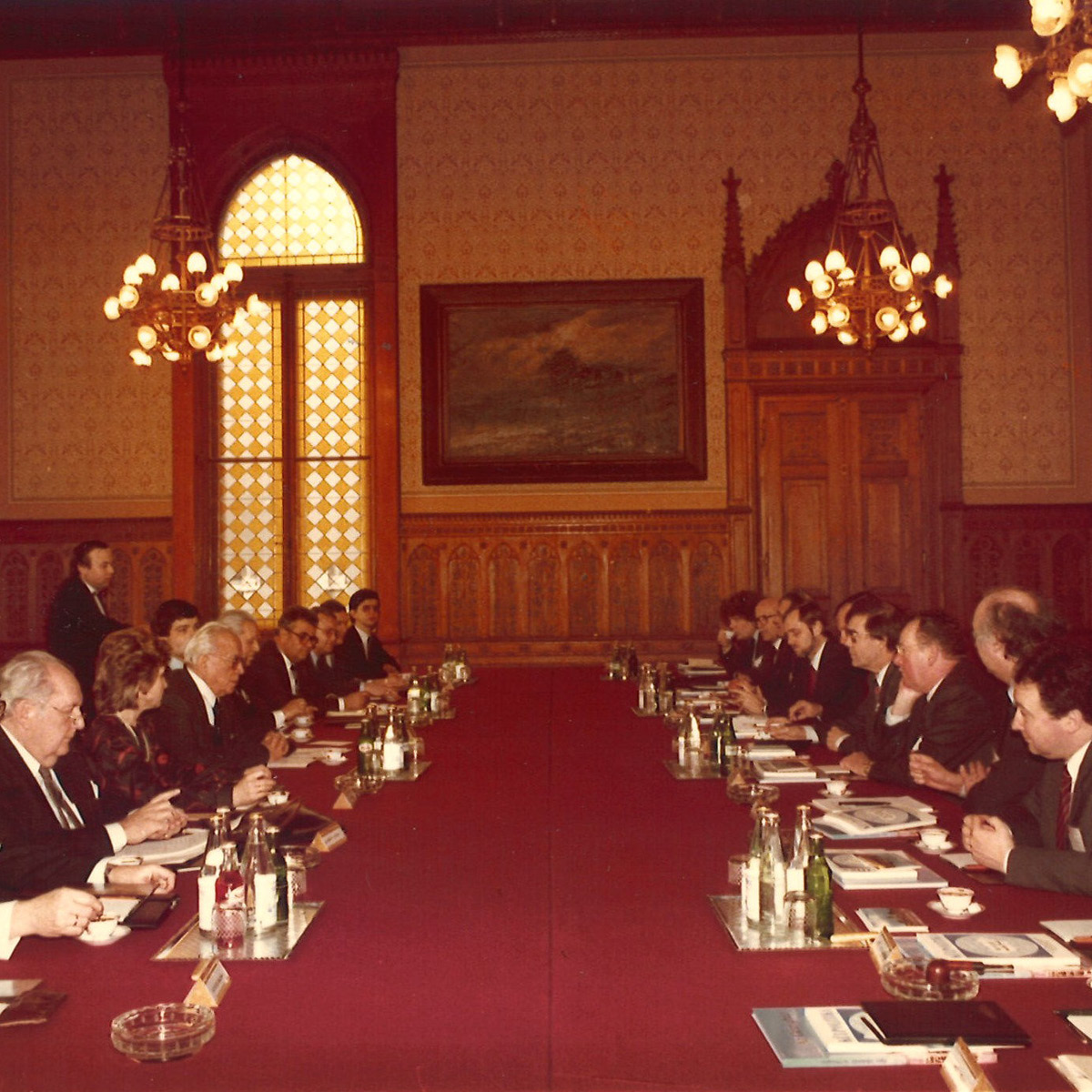
The Sub-Committee on Central and Eastern Europe travelled to Budapest at the invitation of the Hungarian National Assembly.
July 1989
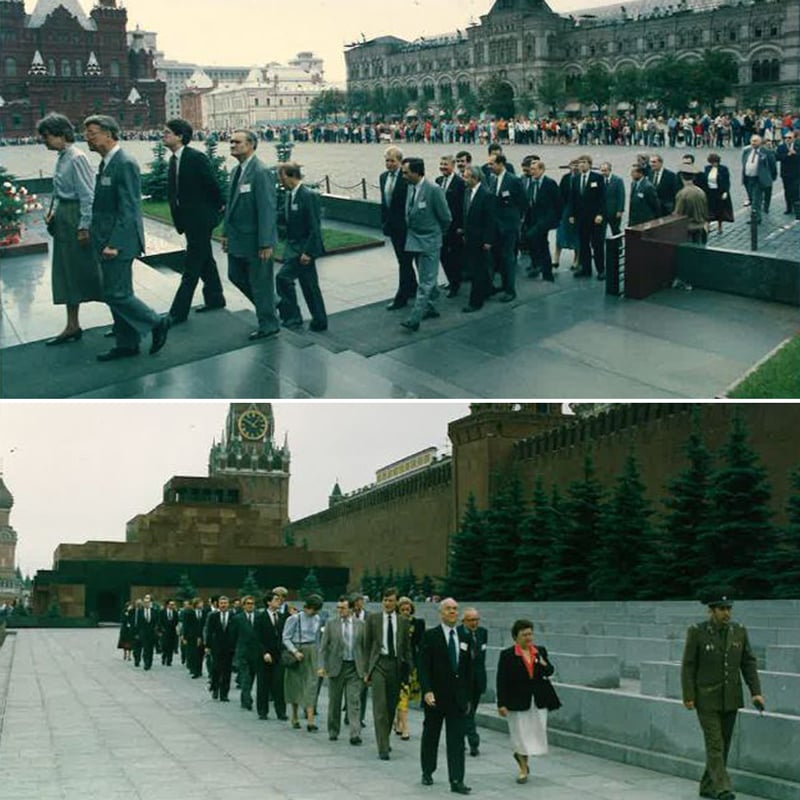
Led by Patrick Duffy, M.P. of the United Kingdom, a delegation of 19 Parliamentarians representing 12 of the 16 NATO nations began a five-day visit to Moscow on 3 July. This marked the first visit to the Soviet Union by the North Atlantic Assembly. Deemed a “historic” visit by the hosts, the delegation met with Prime Minister Nikolai Ryzhkov and Defence Minister Dimitri Yazov, amongst others.
Still in 1989
October 1989
In October 1989, General of the Soviet Army Vladimir Lobov became the first leading military official to address the Annual Meeting in Rome. The General, a guest of the Defence and Security Committee, spoke on the theme “Towards Conventional Stability in Europe” alongside General John Galvin, NATO Supreme Allied Commander, Europe.
Still in 1989
November 1989
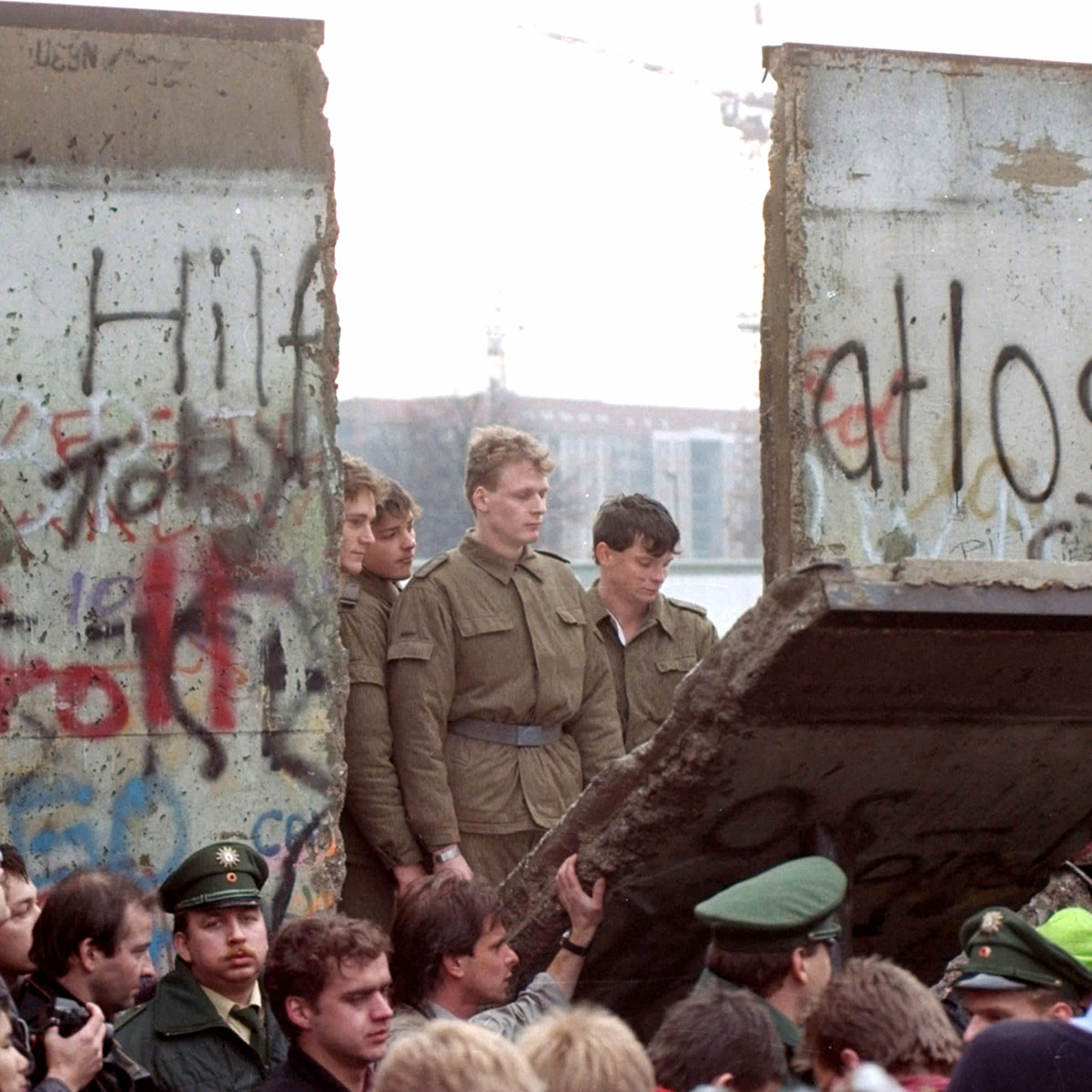
With the end of the Cold War came a new era of cooperation—expanding partnerships, welcoming new members, and strengthening democratic values across an ever-growing community of like-minded nations.
1990
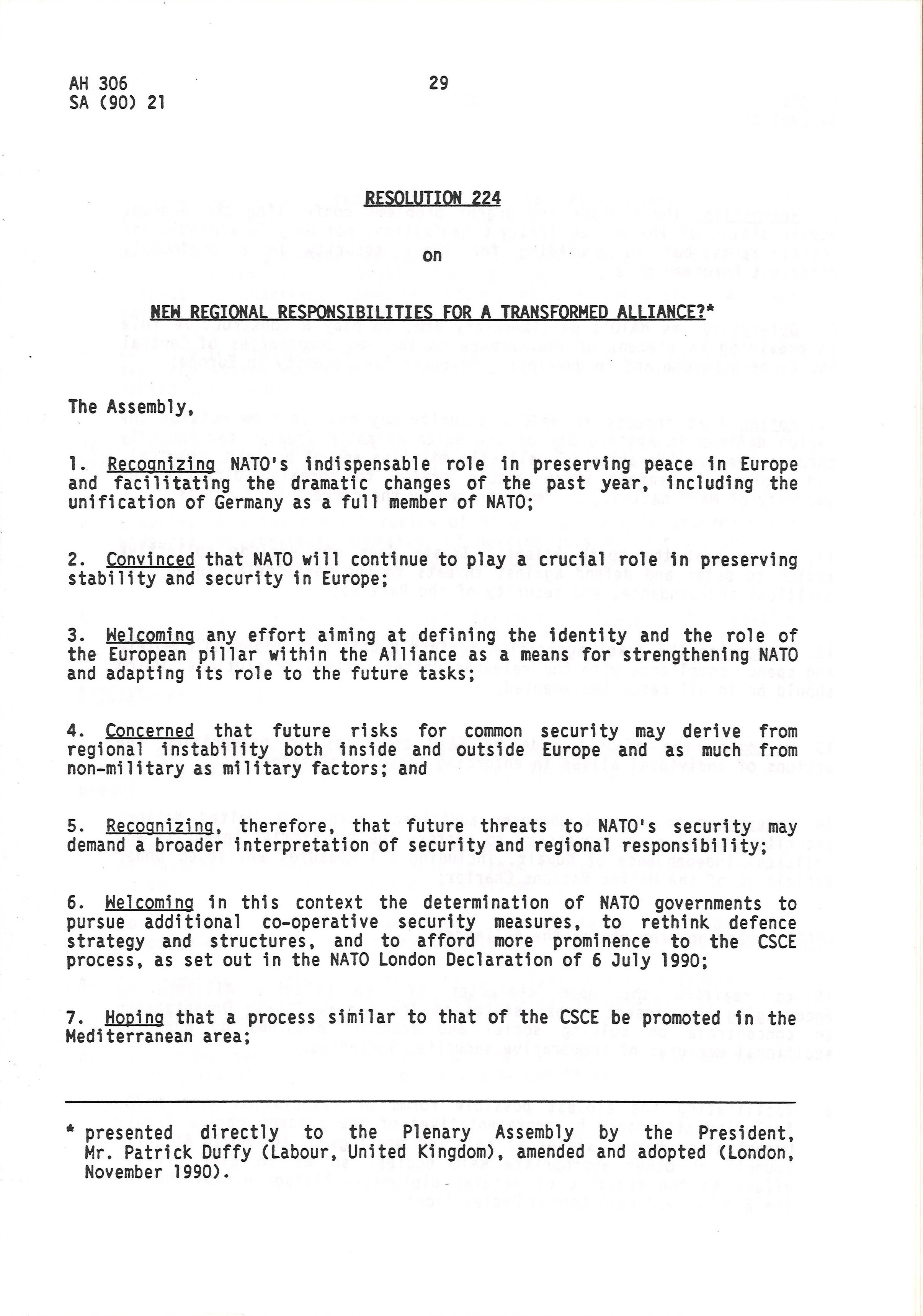
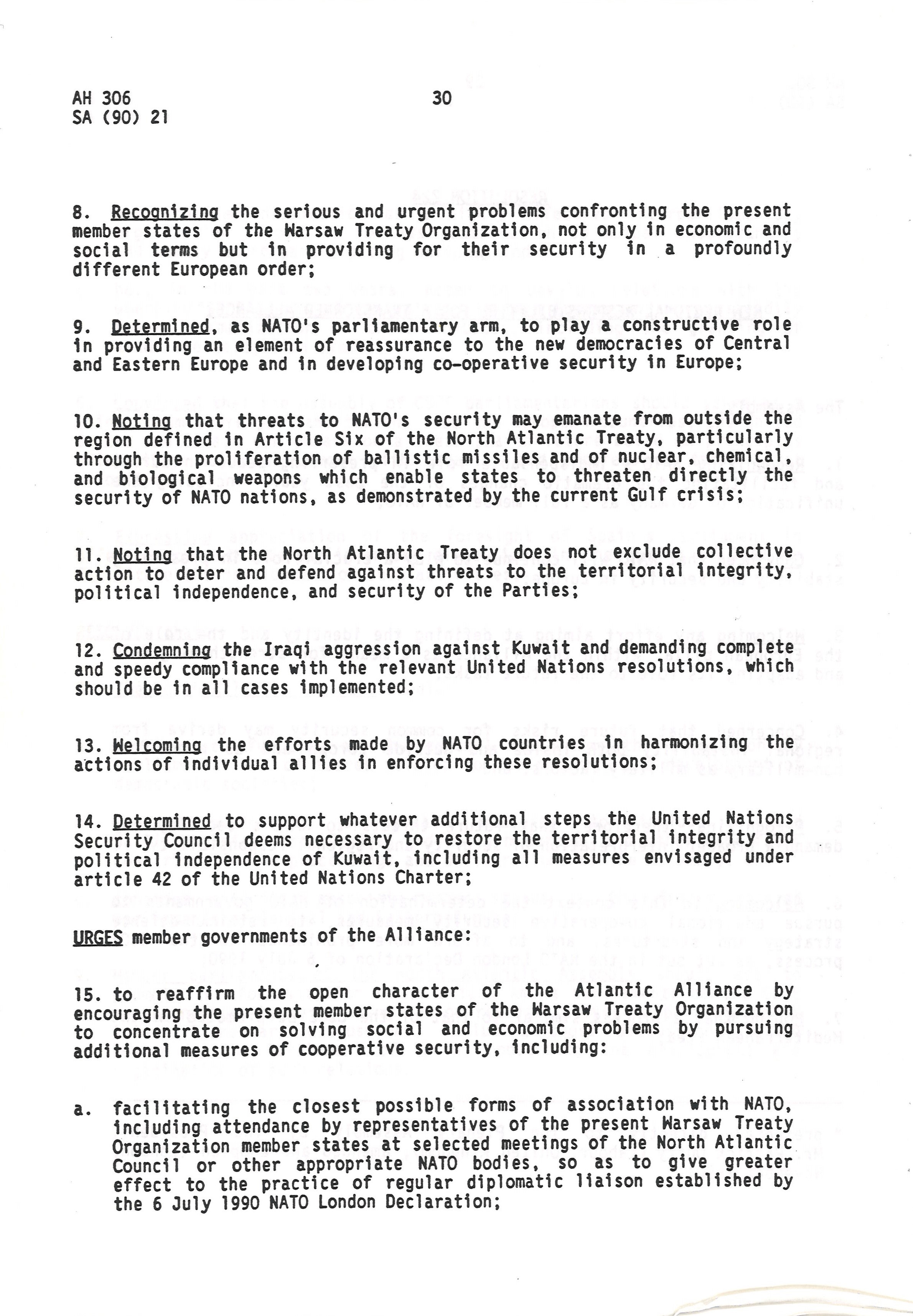
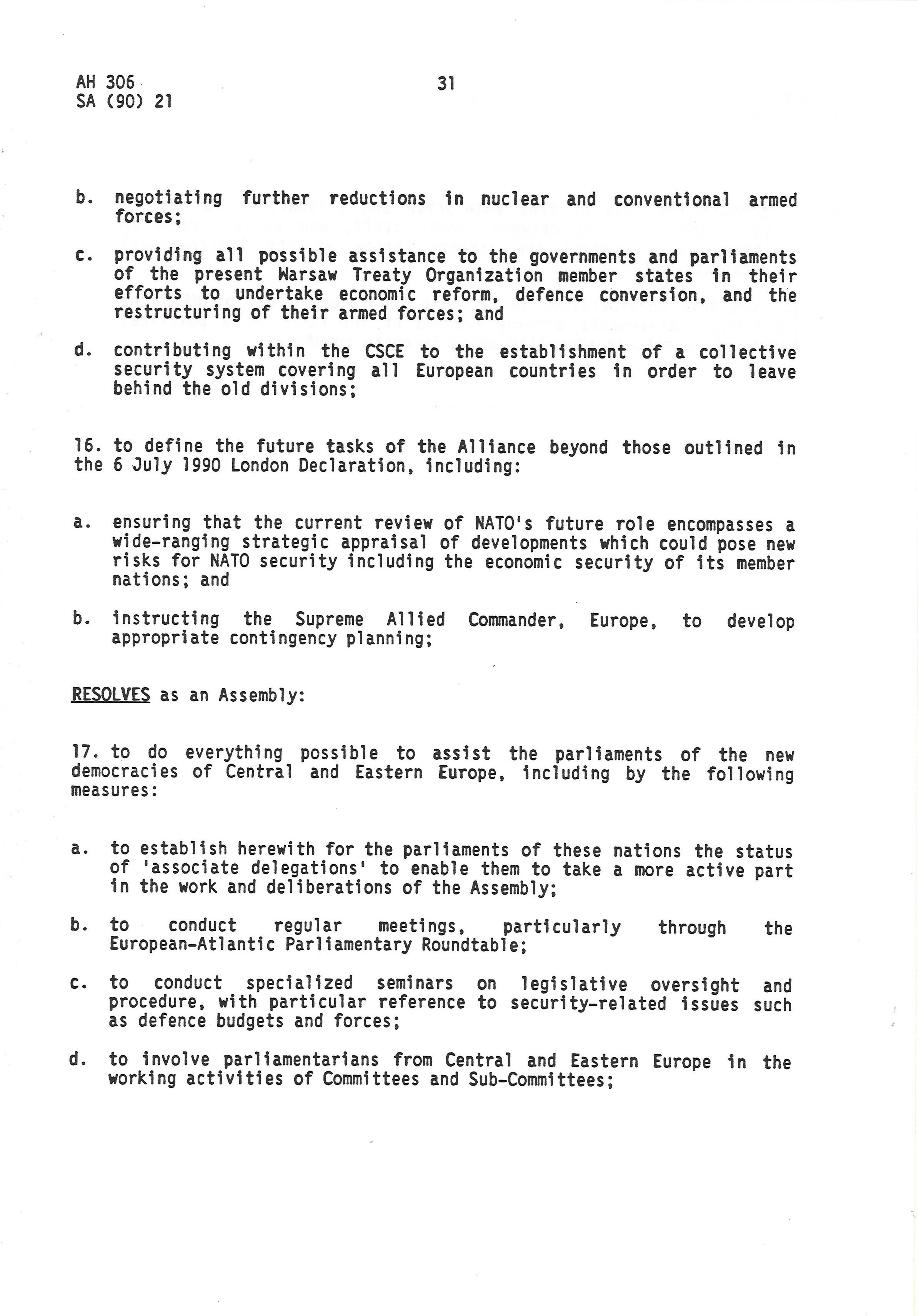
At the Annual Session in London, the Assembly adopted Resolution 224 on “New Regional Responsibilities for a Transformed Alliance” which created the new status of “associate delegation”.
1991
The first Rose Roth seminar was held in Lithuania in a tense environment with Soviet troops still present in the country.
mid 1990s
Countries aspiring to become NATO members used the Assembly as a channel to build support for their integration into Euro-Atlantic structures. The requirement for parliamentary ratification gave an additional emphasis to Assembly debates on enlargement.
1996
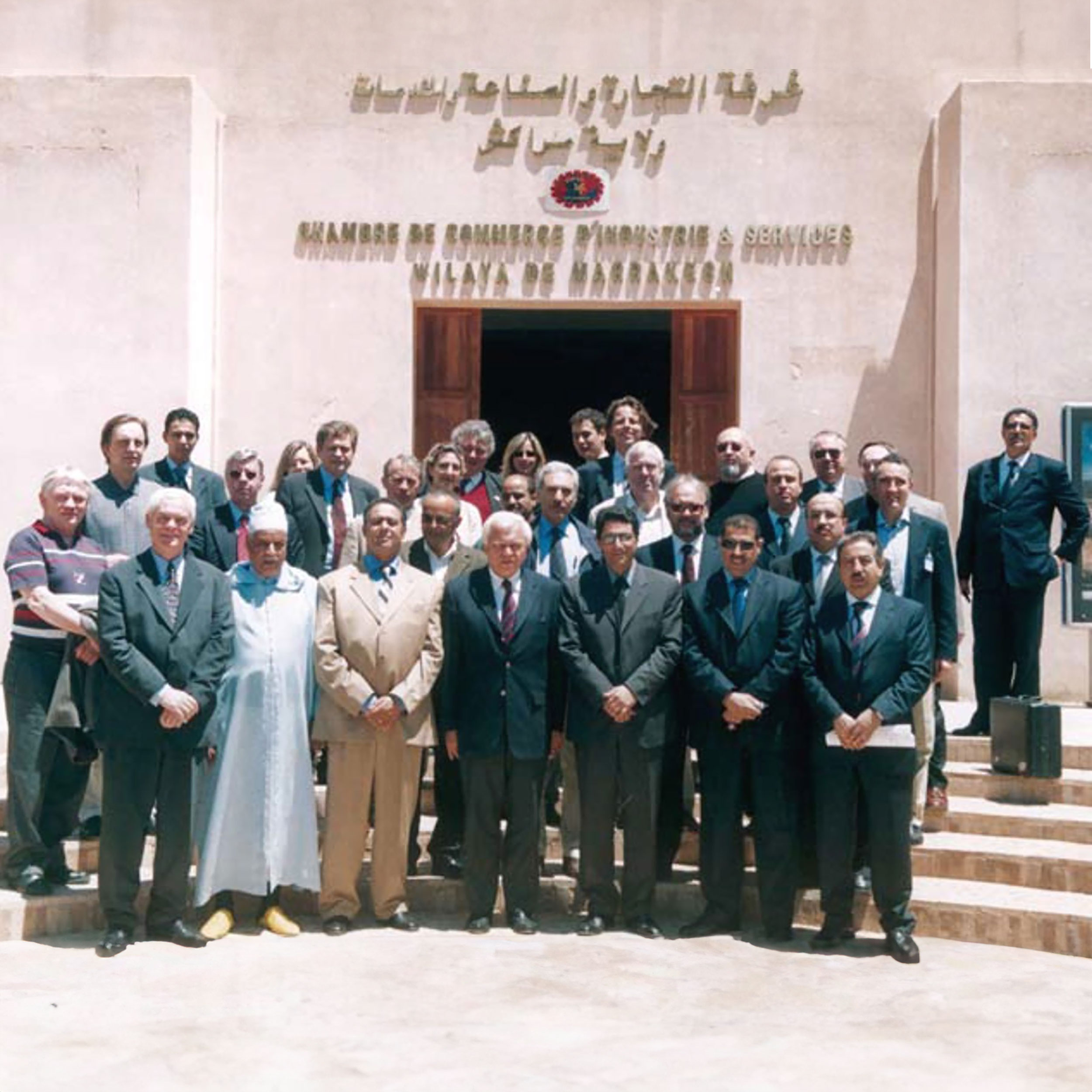
In 1996, the Assembly established a Mediterranean and Middle East Special Group (GSM), a forum for cooperation and discussion with parliaments from the Middle East and North Africa.
1997
At the historic Madrid Summit, in which the Czech Republic, Hungary and Poland were formally invited to accede to NATO, then NATO PA President, US Senator William Roth, addressed NATO Heads of State and Government.
1998
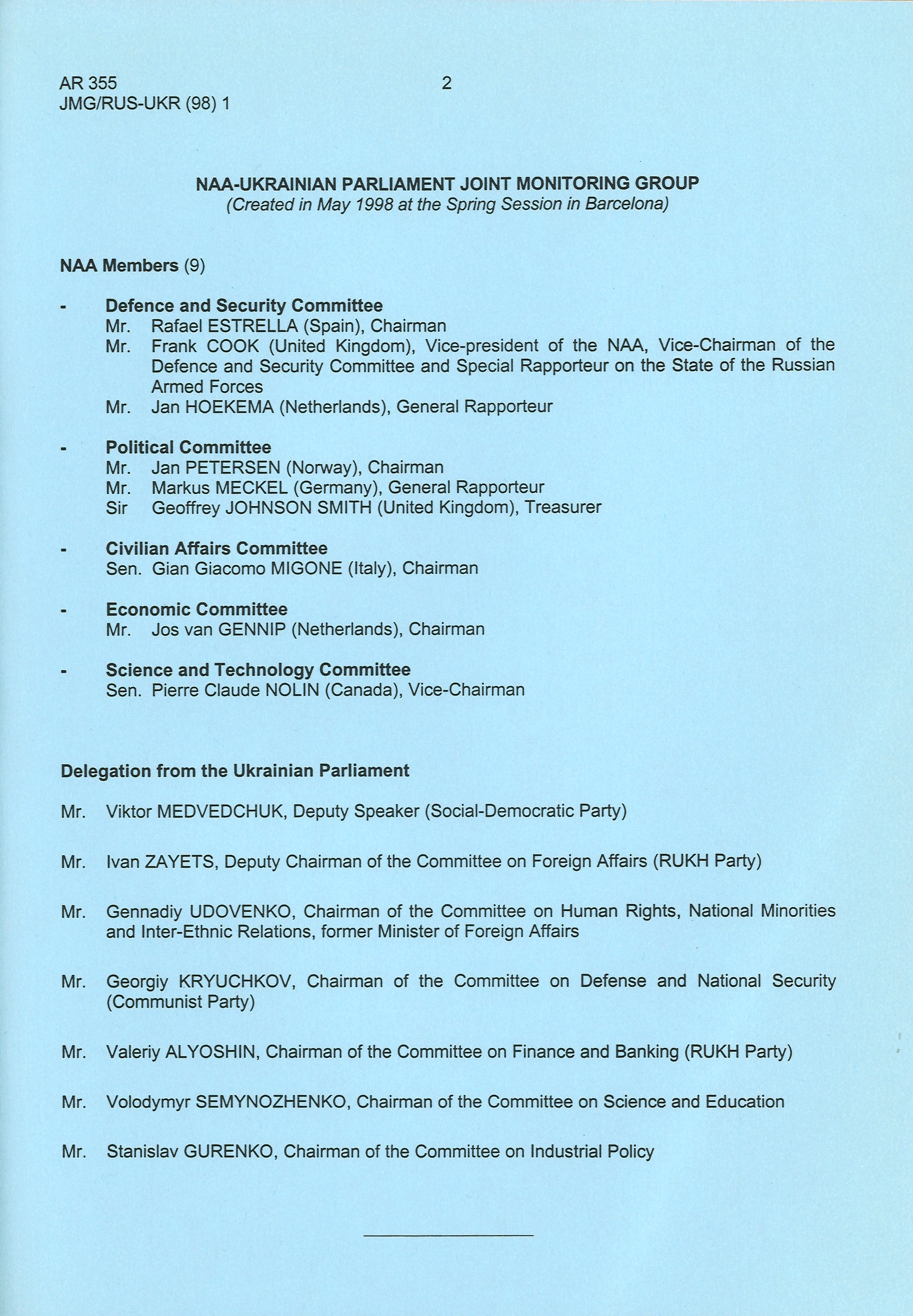
In May 1998, the Assembly established a Joint Monitoring Group with the Russian parliament to oversee implementation of the NATO-Russia Founding Act and a Joint Monitoring Group with Ukraine to oversee implementation of the NATO-Ukraine Charter on a Distinctive Partnership.
1999
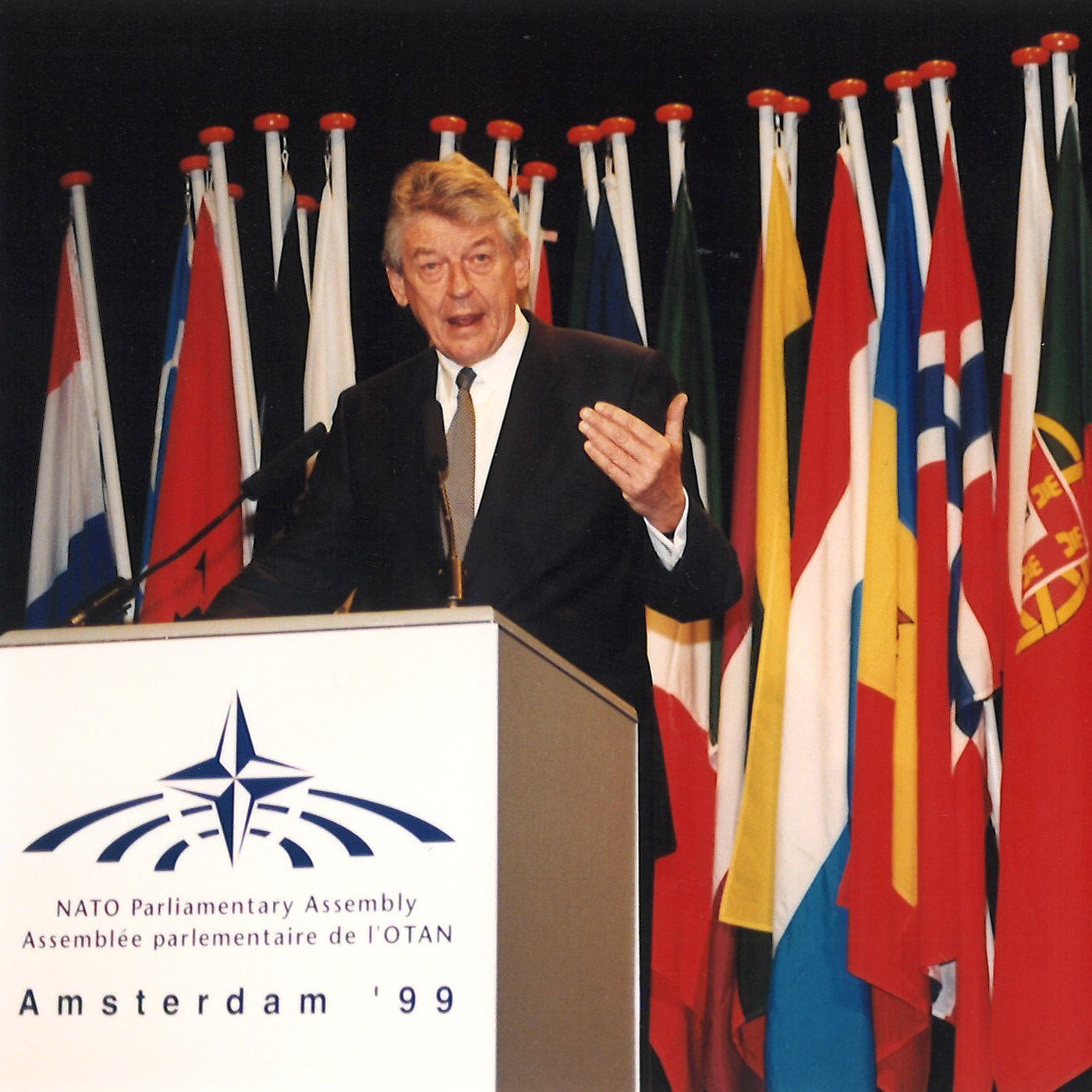
The 12th Conference unanimously agreed to rename the organisation as the NATO Parliamentary Assembly.
Still in 1999
March 1999
2000
The NATO PA created a New Parliamentarians Programme aimed at giving new members of parliament, or members of parliament new to defence issues, a better understanding of NATO’s structures and processes. The initiative was aimed at parliamentarians under forty years of age in their first term in Parliament. The programme is today known as the “NATO Orientation programme”. Forty-two young parliamentarians participated in the first course.
September 2001
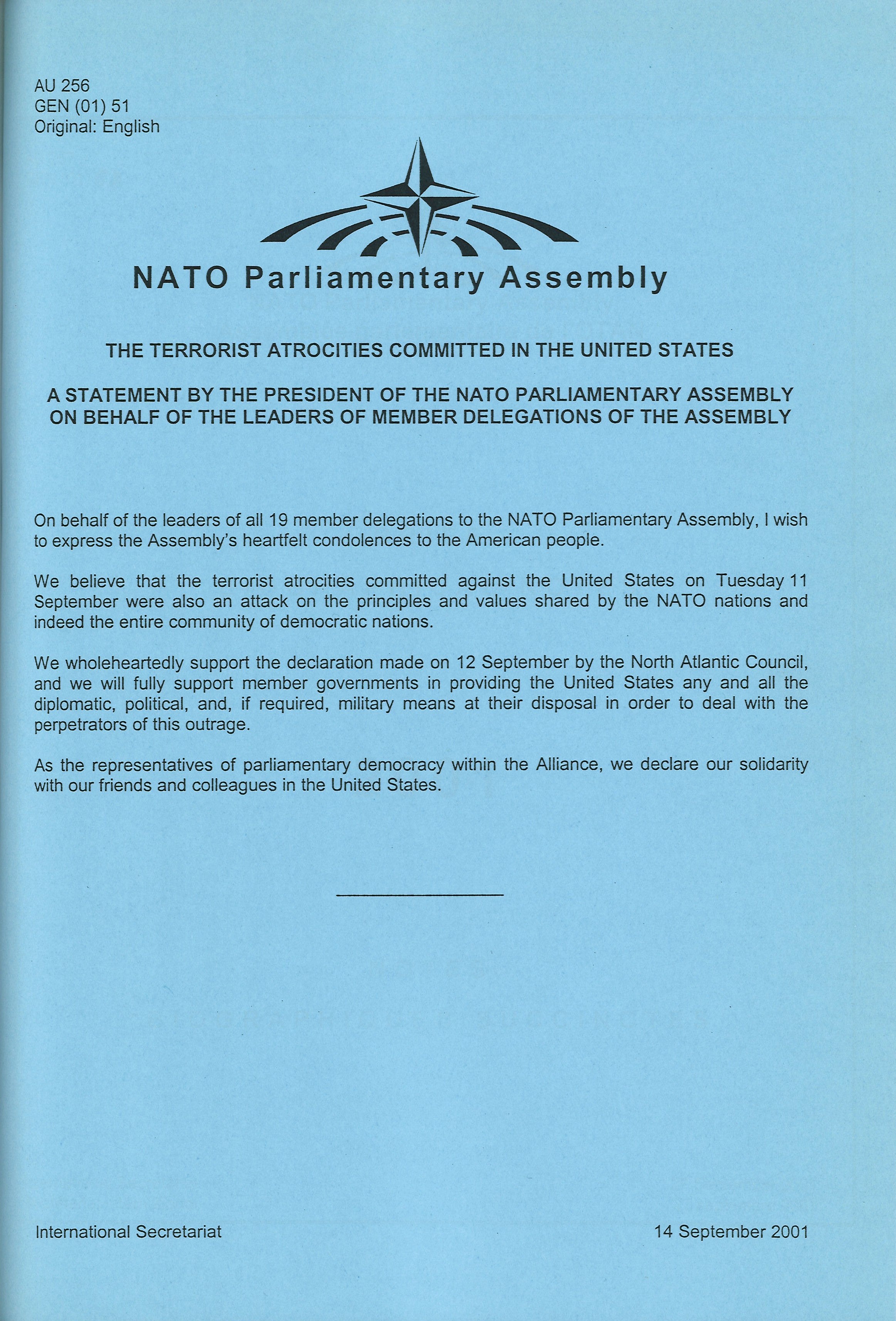
The terrorist attacks of 11 September 2001 brought to the forefront the new reality in the 21st century of an unpredictable world characterised by a new set of global challenges including terrorism, the proliferation of weapons of mass destruction, and the emergence of lawless territories in “failed” and “failing” states.
Still in 2001December 2001
The US National Defence University hosted the first Parliamentary Transatlantic Forum in Washington, D.C.; the largest annual gathering of European parliamentarians in the United States. A total of 60 parliamentarians from 27 nations participated in the meeting.
2002
In 2002, the NATO PA-Russia Joint Monitoring Group became the NATO-Russia Parliamentary Committee. The NATO-Ukraine Joint Monitoring Group became the Ukraine-NATO Interparliamentary Council.
2004
At the Annual Session in November 2004 in Venice, Italy, which marked the beginning of celebrations of the Assembly’s 50th Anniversary, the entire North Atlantic Council joined members of the Assembly in a special plenary meeting for the first time.
Still in 2004
2004
2007
In 2003, NATO took over command of the International Security Assistance Force in Afghanistan (ISAF). While the ISAF assisted the new democratically elected government of Afghanistan to re-establish control over its territory and rebuild its security structures, the Assembly reached out to the new Afghan Parliament. The Assembly conducted its first official visit to Afghanistan in 2004 and in 2007, a group of Afghan parliamentarians attended a NATO PA session for the first time.
2008
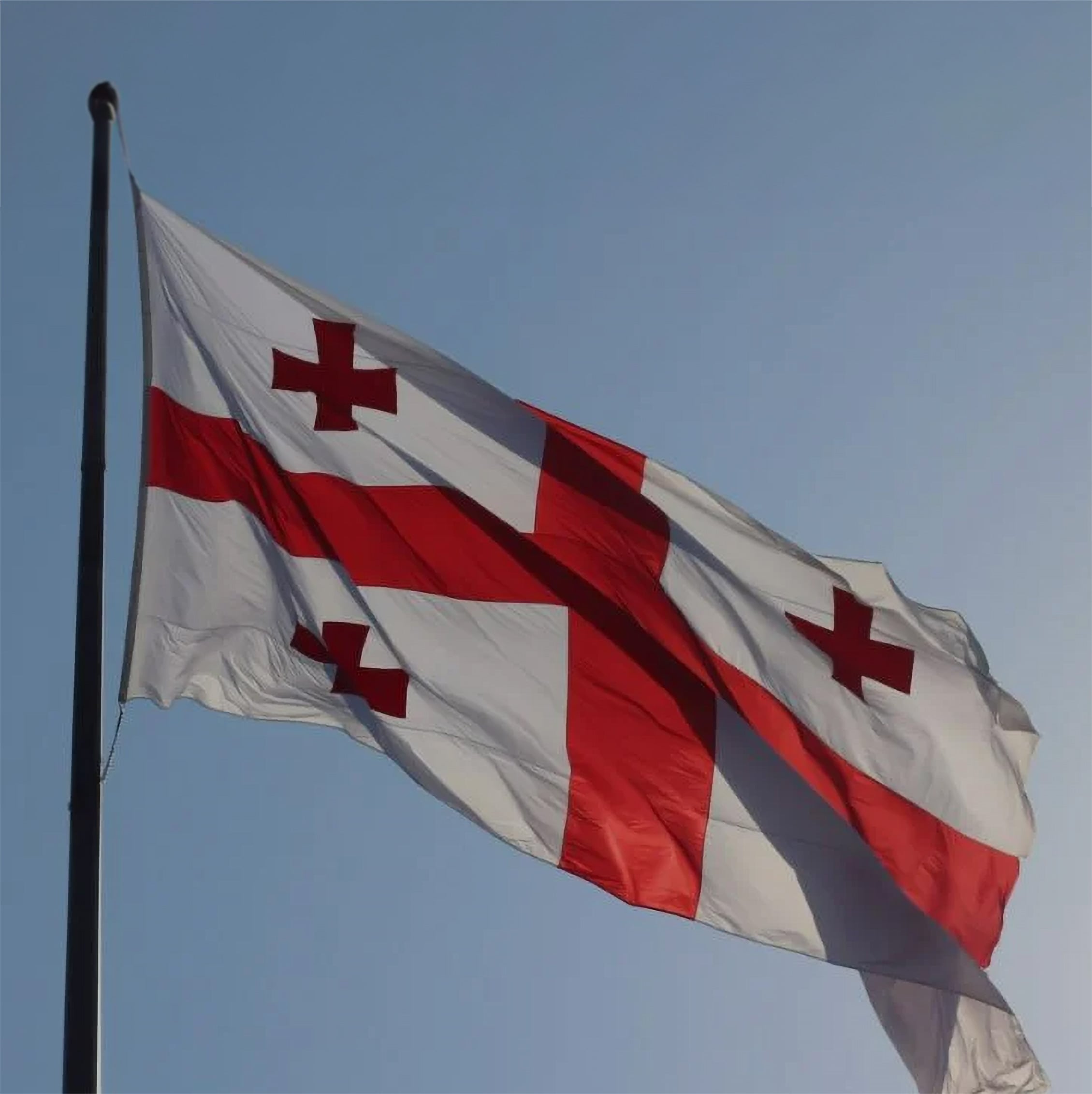
Following the August 2008 conflict in Georgia, the Assembly decided to strengthen its institutional relationship with the Georgian Parliament by creating the Georgia-NATO Interparliamentary Council (GNIC). Georgia became an Associate Member of the Assembly in May 1999. Through its cooperation with the Georgian Parliament, the Assembly has supported Georgia’s reform agenda and its goal of eventual Alliance membership. Further information
2009
2014
In response to Russia’s aggression against Ukraine and illegal annexation of Crimea, the Assembly expressed its unambiguous support for the sovereignty, territorial integrity and political independence of Ukraine, and withdrew Russia’s associate member status. Further information
Still in 20142014
NATO’s Summit in Wales in September 2014 opened a new chapter in the Alliance’s evolution in a security environment characterised by tensions to the East and growing instability in the South. In this context, parliamentary support, dialogue and diplomacy remain as important as ever.
©NATO
2017
On 7 June 2017, the NATO Parliamentary Assembly President Paolo Alli (Italy) attended the flag-raising ceremony organised at NATO Headquarters to mark Montenegro’s accession to NATO. The President's participation underlined the NATO PA’s long-standing and continuing support for NATO’s Open Door policy.
2018
On 19 November 2018, Madeleine Moon was elected as President of the NATO PA by the entire assembly at the plenary session in Halifax, Canada. Moon succeeded President ad interim Rasa Jukneviciene.
2020
On 27 March 2020, North Macedonia became NATO’s and the Assembly’s 30th member. The preceding month, NATO PA President Attila Mesterhazy (Hungary) attended the ratification of the North Atlantic Treaty by the Assembly of the Republic of North Macedonia in Skopje.
Still in 2020
2020
The COVID-19 pandemic was an unprecedented and multidimensional crisis, affecting citizens’ health, their way of life, the global economy and international security. The Assembly addressed COVID-19 in a series of reports and recommendations and continued to address the other critical challenges the transatlantic Alliance faced. In a time when the Assembly could not meet in person, the NATO PA offered a multilingual web conferencing platform for its members to exchange on these priorities.
2021
Democracies are facing new threats. Terrorism, extremism, disinformation and outside interference target the principles and institutions at the heart of their societies. Autocratic regimes seek to promote “alternative models” of repression and disregard for international law and fundamental rights and work to undermine the international rules-based order.
Still in 2021
2021
The NATO PA Standing Committee created a “Women for Peace and Security Award”. The award was presented for the first time in 2021 during the Plenary Sitting of the 67th Annual Session of the NATO Parliamentary Assembly, taking place in Lisbon, Portugal.
2022
On 24 February 2022, Russian President Vladimir Putin decided to start a war of choice against Ukraine, triggering the gravest security crisis in Europe since World War II. The Assembly has stood with Ukraine from day one, affirming its unwavering support for Ukraine, its sovereignty, territorial integrity and right to self-defense and self-determination.
2023
On 4 April 2023, NATO Parliamentary Assembly President Joëlle Garriaud-Maylam (France), attended the flag-raising ceremony at NATO Headquarters to mark Finland’s accession to NATO. As in the past, the NATO PA encouraged prompt parliamentary ratification and kept track of the accession progress.
2024
On 7 March 2024, NATO and the NATO Parliamentary Assembly welcomed Sweden as its 32nd member.